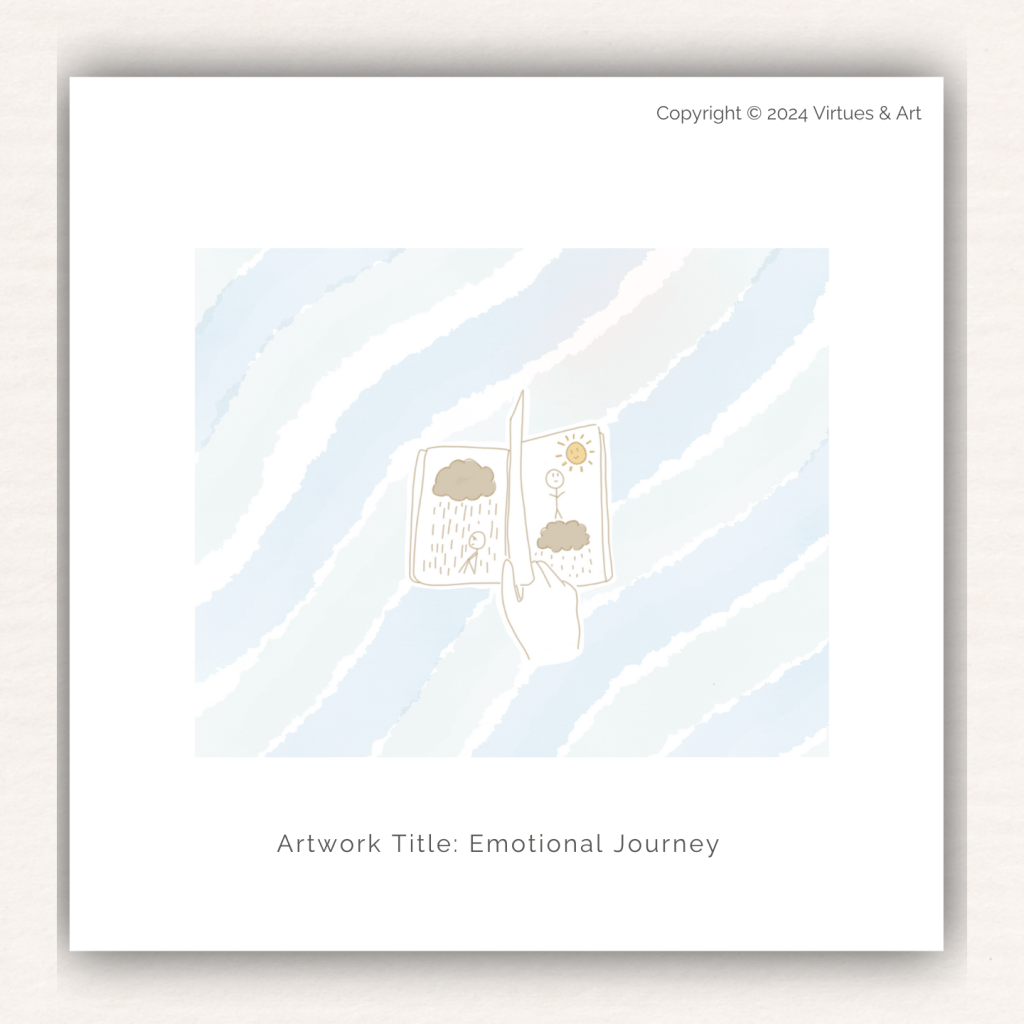
Creating your first piece of therapeutic art can be a transformative experience, allowing you to externalize and explore your emotions. Here’s a simple guide using basic principles of art therapy to help you begin this journey.
Materials Needed:
- Paper or canvas
- Art supplies (e.g., paints, markers, crayons)
- A quiet, comfortable space
Step 1: Set Your Intention Before you begin, set a clear intention for your art session. Decide what emotion or thought you want to explore. This focus will guide your creative process.
Step 2: Choose Your Colors Colors can powerfully convey emotions. Choose colors that resonate with how you feel:
- Red for energy, anger, or passion
- Blue for calmness, sadness, or serenity
- Yellow for happiness, anxiety, or agitation
- Green for renewal, balance, or jealousy
Step 3: Select Your Tools and Materials Decide whether you want to use soft materials like charcoal or pastels for gentle, diffuse effects, or sharper tools like pens or markers for precise, defined lines. Your choice should reflect the nature of your emotional exploration.
Step 4: Create with Lines and Shapes Begin to draw or paint, focusing on the lines and shapes that feel natural:
- Straight lines can express strength or tension.
- Curved lines might represent calmness or softness.
- Jagged lines could depict turmoil or anxiety.
- Circles often symbolize wholeness or protection.
Step 5: Let Patterns Emerge As you draw, let patterns emerge naturally. Repetitive patterns can be soothing and meditative, helping to stabilize turbulent emotions.
Step 6: Reflect on Your Artwork Once you’ve finished, step back and reflect on your creation. Think about what the colors, shapes, and patterns say about your emotional state. Consider keeping a journal to document your thoughts and feelings about the process and outcome.
Creating your first therapeutic art piece is a step toward understanding yourself better and managing your emotions through creative expression. Remember, there is no right or wrong way to create art in this context—it is all about your personal journey and emotional expression.
 Virtues & Art
Leave a comment